Saturday, February 23, 2013

The New Book


Scholastic Canada's summer catalogue has the new Canadian Disasters book already listed and has an early version of the cover on display. Here it is.


It will change slightly, I am told, but I like the look of it just the way it is. Already the Chapters/Indigo book database has it listed, but without the cover design. It will not be for sale until June.
I've posted some teasers for the new stories at my website http://reneschmidt.ca/ .  Technology is wonderful (when it works and when I can use it).  This book was a lot of fun to work on.  I read a tonne (metric only please) of books for research, especially about the Titanic and the Franklin Expedition. Those stories have more odd theories than O.I.S.E., and it's worth reading the more commonplace ones to stay ahead of the critics.  

I'm about a decade or two behind the times when it comes to recent developments in software and hardware for computers. The time lag seems pretty consistent for me.  Lately I'm trying to buy a flight control joystick and some software for such a function for my iMac. Why such a program?  The need comes from my 'new' manuscript called Dan, Time Boy. I'm hoping some well-known Canadian publishing company whose name rhymes with 'fantastic' publishes it.

Friday, February 15, 2013

Something Funny at Winterlude & Disastrous Writing

Last week Shirley and I drove to Ottawa to see our son Dan compete in an improvisation comedy competition at Ottawa's Winterlude. Never having done the Winterlude thing before we had to 'do it right' skating on the Rideau Canal, admiring ice and snow sculptures and letting the weather remind us we live in Canada after all. I didn't buy a beaver tail. That's us holding hands, about the seventeenth speck from the redhead beside the girl with the scarf in the shot below...
Dan and five others of the improvisation team at Ottawa U. competed with six of the best from Carleton   U.  This was a great experience; the improv competition was the only amateur event, the others were comedy nights by professionals.  It was called Cracking Up The Capital.  Dan's team and Carleton were hosted & led by comedian Colin Mochrie, who also joined in with the students in a couple of the improv sketches. 
The Ottawa U. team won the event and the trophy (a dubious-looking statue of a beaver abusing the Peace Tower) for earning the top score as judged by professional comedians including Patrick McKenna.  Shirley and I were pleased that finally Dan's sound effects and funny voices have led to some measure of success, though we are still looking for the big monetary payoff.  Dan says he enjoyed Colin Mochrie's professionalism and guidance, at least that's what we think he said after the 'after party' which lasted until 3:00am. Dan is at the left, learning the occupation of the murderer in a team sketch.
CANADIAN DISASTERS Take four...
I've been busy going back and forth with this version's editor, Nicole, at Scholastic.  Proud of my spanking-new Imac computer and the butter smooth keyboard, I was sure there'd be no problems with the final edit.
Hah!
The version of Word I bought and paid for and loaded on to the Imac was not up to the task of editing hundreds of pages with Review (Track Changes) up and running. The huge number of little comment boxes, all colour coded and looking like Christmas, competed to slow everything down and the document crashed repeatedly.  My computer claimed the program was using more than a gigabyte of data, which is like, impossible... I rebooted, reloaded, saved to different file names and all that about sixteen times every day. Calls to Apple and to Microsoft occurred so often I had them on speed-dial; and each time I was told to try something different. Delete and reload the program, reboot the computer, rename this and delete that. Finally a technogeek admitted microsoft had a problem with Word 2011 on an Imac when it came to use Track Changes.  "A definite fix is certainly on the way, sir"  "Any day now you will be receiving the upgrade, sir" I appreciated the honesty, I guess, when it finally came.  The good news is nothing serious or lengthy got lost in the process.  That edit is done.  A lot easier than typewriting manuscript pages and using white-out papers...
 Just one more look-over and the book should be ready.  I still have no idea what the cover will look like, or even the title, or the photos inside.  I hope to see them soon.
Speaking about photos, Nicole shared this one with me; say hello to Andromeda, a very high resolution photo from an observatory in Southern Ontario.
   

Tuesday, October 23, 2012

East Coast Blues & Polio


Researching more Canadian Disasters can be sad work.
The stories are tragic, or sad, or wasteful or amazing, but are worth reading about, even if only to teach us not to do that thing, or build that van, or to remind us to check that warning light again.
From Cape Spear to Frederick Island and from Grise Fiord to Point Pelee, there are Canadian stories we read about in the papers but are soon lost to the popular media until an anniversary slips past.  But Canadian history is worth retelling and writing about. As usual I try to find stories which represent all Canadians and give equal value to places like Manitoba or Saskatchewan, but I can't.
Not enough bad stuff happens in Saskatchewan, luckily for you folks.

Tragedies always seems to tilt us unfairly toward our east coast.
What hasn't happened in or near Newfoundland? Previous versions of Canadian Disasters included the 77 seal hunters freezing to death on the ice and the extinction of the Beothuk Indians. We also wrote about the Ocean Ranger, which I think is still one of the most unbelievable and preventable disasters ever to hit Canada.
But I've been learning about more stories coming from the eastern part of our country.
I've just learned about the Newfoundland Hurricane way back in 1775. It killed about 4000 people, mostly fishermen and sailors caught out in their boats. It was probably Canada's worst hurricane ever, and the second deadliest in all North America.
A few months ago I read various accounts of the heart-wrenching tale of the Truxtun and the Pollux, two US warships wrecked on the Newfoundland coastline, and the simple human decency shown to a black sailor who was taken nearly dead to be warmed, washed and fed by the people of St. Lawrence. (Can you believe that black sailors were not allowed off their ship in Iceland in the 1940's because of a ban against 'people of colour'? Iceland!) Lanier Philips, the sailor whose black skin the sailor's wife tried to wash free of the stain of oil, was so touched by the acceptance shown him by these extremely poor people of Newfoundland it changed his life.  He became an advocate for African-American sailors and citizens and was honoured to walk with Martin Luther King Jr. The Truxtun / Pollux story is coming to the book this year.


Also new this year will be the Cougar helicopter crash which went down off Newfoundland in 2009. This sad event could have been prevented by due diligence years before, when failures of the main engine gearbox began to reveal themselves.


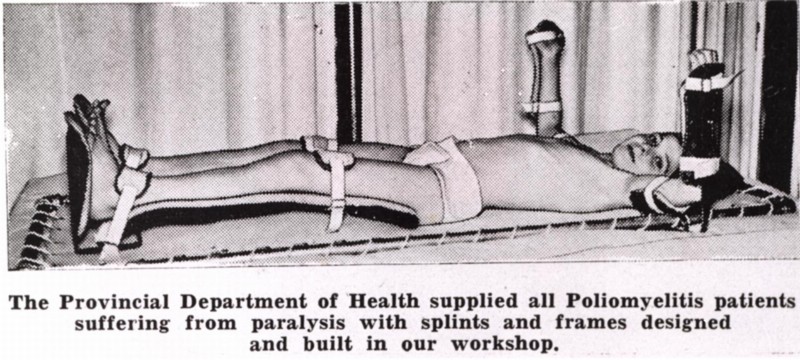
Bradford Frame, Toronto, 1937

Today I've been writing about Polio.  Hard to believe how fearful, and with excellent reason, Canadians were about a common virus.  Decades of work went into finding a vaccine which has made this sneaky disease virtually unknown in Canada.

Monday, September 24, 2012

A cirque and two new stories


I like variety.
Maybe I can last a couple of hours, sitting at my desk, staring and typing.
I'd get a lot more writing done if I didn't get up and start doing something which seems really urgent. Just when I get going it's what's that over there? or suddenly the chimney needs to be brushed out right now. Coffee, which I love, just fuels my peripatetic ramblings which bring events and scenes to my eyeballs. 
Last week I attended the Amaluna show of Cirque du Soleil in Toronto. The girl pictured here could contort herself into strange tight formations and later on dive into this oversized glass bowl and not hurt herself. Really amazing stuff to see. Being there with my 88-year-old mother in a wheel-chair (she paid, I drove) we had front row seats. A creepy guy in tights with a large tail slinked around like Gollum and stole people's popcorn. Back when I drove taxi in Toronto men used to get arrested for wearing as little as he did.  Chinese acrobats did amazing flaming routines. The very fit and fearless guys (below) were vaulting onto that basic oversize teeter-totter plank and catapulting each other really high in the air.


If you get a chance, see this. I can't think of a better couple hours of entertainment which isn't digital, animated, pre-packaged, enhanced, dubbed or voiced-over.  Best show I've ever seen. Just start with attractive, talented, extroverted and fearless people, add some persistent effort and physical training and see what happens.

I'm researching Canada's worst train wreck at St. Hilaire Quebec back before Confederation. Itinerant workers, one day off the boat in Quebec are shipped west to work and their 11 car train falls off an open canal bridge. Nobody knows exactly how many people died because nobody knows just how many were on board. No records were kept. No names recorded. They say 99 died, but many bodies were not found. The German, Czech and Polish survivors spoke no English so Grand Trunk Railway employees (no doubt hoping for a bonus) tried to get some of these injured survivors to sign a legal document absolving the GTR of any responsibility.  Welcome to the new world, folks...

Also I'm researching a forgotten DC-9 fire on an Air Canada jet which incinerated half those on board, including folksinger Stan Rogers. (Barrett's Privateers, The Northwest Passage)
Here's a jet just like it. Logo's the wrong decade, but you get the idea. After that fire changes were made, such as smoke detectors (!) automatic fire extinguishers, and lit-up aisles in case smoke fills the cabin. Can't believe they had no smoke detectors on aircraft before 1983, especially with people still lighting up in toilets, but they didn't.
They had free drinks though...

Saturday, September 22, 2012

More new disaster stories & stuff

Some stories are depressing.  I spent last week researching two horrific van crashes in Canada.  One last year killing itinerant farm workers and one in 2008 which obliterated most of a high school basketball team. There's nothing really positive about these stories; the collision was with trucks in both cases, and the victims were thrown from the vans and killed on impact. The vans ripped apart like pop cans. This makes sense, when you consider that stretched 15 person vans are just flimsy elongated versions of flimsy regular size vans, which are taller versions of flimsy cars, which get their strength from artfully folded flimsy sheet metal.  Compare metal thickness of new cars with the old and bulbous vehicles of the forties and fifties and you see what cost-cutting can do. Bang on the hood of an old truck or antique fire engine and you'll hurt your hand.  Nobody will prevent someone from falling asleep at the wheel, and crashes with trucks will still kill people, but we can reduce the number of victims by making sure the vehicles they are in are sturdier.  
       School buses are a case in point. My friend Jim suggested I mention school bus races in my gruesome story and I believe I will. At Brighton Speedway they race school buses in September.  Kids pee themselves with delight to see these behemoths try to race around and knock each other off the track. Can hardly be done. I know one driver who was desperate to flip his old bus but he couldn't. Year after year he tried.  With the same bus.  What are we missing here?  Old school buses can be bought for a couple K, and sure they are slow and boring and burn too much gas, but if you happen to get into an accident, the extra sturdy frame, the massive U channel bumpers, the won't-release-on-impact door hinges, and the stay-bolted-to-the-ground ugly bench seats keep whoever's in there, in there. These old buses, if they ever get flipped on the track, are just fork-lifted upright again and they're good to go.  Wanna stay safe?  Check out old BOBO down below.     

Too late for the victims I'm writing about, but it could save a life some miles down the road.

Happier News!
Our son Adrian is in Africa.  This is his fourth continent now. He moved to Vancouver at age 17, worked his way across Australia as a bricker to go see S.E. Asia, returned and worked the oil rigs to earn the cash to go see Africa. We worry, yes, but good on him.  He's doing what others (me) might aspire to but wouldn't dare to.


You see Adrian in previous blogs helping us with the house build.  In November he plans to see Central America, maybe S.America too.  Continent five.
After that he will go to University.

Younger brother Dan is doing a reverse journey.  School first at U. of Ottawa, and then to Asia (for starters) when he graduates to teach E.S.L.


 We get tired just thinking about their ambitions. But they have ambitions.  God bless them!

Friday, September 14, 2012

Titanic becomes a Canadian Story

The sinking of RMS Titanic has its 100th anniversary this year and now the connection to Canada is made more clear in a book by Canadian author, Alan Hustak.  Called, Titanic The Canadian Story it was published by VĂ©hicule Press in 1998 and is a good read for all Titanic fans in Canada. The CBC now has a mini-series of the same name and I hope the series helps Hustak sell some more books. He has done some good research on various families, particularly the families of first class survivors and victims of the tragedy.  The CBC series follows his research pretty closely as far as I can tell. Anyone who happens to be passing by Halifax can see some pretty interesting stuff in the Maritime Museum of the Atlantic there.  Besides a Titanic deck chair or two and other memorabilia, there are great displays about the Halifax Explosion, one of the last floating Canadian corvettes remaining from the Battle of the Atlantic, and some amazing hand-built wooden sailboats, dories and workboats.    

Interesting Titanic stuff I learned:  1) About one in ten passengers were either Canadian or headed to Canada to live or work.  2) Canadian ships from Halifax were hired to retrieve, embalm and return bodies for burial or to perform burial at sea for those who were badly decomposed. 3) The class system was in use even for the dead; when the body could be identified, the 1st class got nice coffins, 2nd class plain coffins and 3rd class got canvas bags. 4) Unclaimed bodies and bodies of those who could not afford to have their loved ones shipped elsewhere were buried in Halifax. 5) Titanic Second officer Charles Lightoller had been a cowboy in Alberta and rode the rails through Canada before returning to the sea.  He'd also been shipwrecked three times prior to the Titanic and survived the Titanic also. Later he would captain a vessel through bullets and shells to help evacuate British Expeditionary Forces from Dunkirk. He'd survive that too.

A fascinating angle in one book I read suggested that a smouldering fire in one of Titanic's coal bins, which was unable to be put out despite crews working around the clock, was the reason the Titanic put so much haste into its New York journey, resulting in the tragic collision. The author suggests Captain Smith and owner Bruce Ismay wanted the Titanic to arrive after midnight in new York, so the New York fire department could quietly douse the smouldering fire without anyone noticing & bringing shame to the White Star Lines... A bit of a stretch. Would the New York Fire Department have more water to pump onto this fire than the Titanic's pumps and tanks had access to? Would the NYFD people be trusted to not tell anyone that there had been a dangerous fire on the world's newest and 'virtually unsinkable' ship?  I would have a hard time with this one. None of the other well-researched books I read took this angle, though there apparently was a coal fire which took some days to put out. Another book used charts and diagrams and seagoing logic of an old Atlantic skipper to prove that Titanic hit low-lying sea ice in the darkness rather than an ice-berg.  This would explain why lookouts didn't see it in time.  So, we're to understand the Titanic hit a patch of low-lying sea ice in the middle of a field of icebergs which other ships had given warnings about... and the lifeboats were found near a field of icebergs the next morning. Anyway, this captain got his book published and probably earned a few dollars for it. Good on him!
A brief recount of the Titanic story, as it relates to Canadians, will be included into Canadian Disasters for 2013.

Sunday, September 2, 2012

A new book contract

Hello to family & friends,
Here is a friendly photo of a dead sailor 167 years after he was buried! Nice blue eyes eh?  Anyway this is John Hartnell, a sailor from the ill-fated Franklin Expedition, who is one of the happy victims of that disaster. The story about the Franklin Expedition will appear in the new version of Canadian Disasters which Scholastic will publish in 2013.  I've been working on new stories which will appear in the new edition, as well as re-writing some of the old ones. It's great the the Harper government has decided a great way to establish and maintain arctic sovereignty is to search for the Erebus and the Terror*
I really don't have a spy in the government who gave us a heads-up. Our list of 'new' stories for the book was agreed on last March.
The Titanic is another of the stories which I will write about, from a Canadian perspective.
Hey, it feels great to be seriously writing again after a year of house building.

*Did you know that the Terror, in its previous incarnation as a British gunship, was the one lobbing 'bombs bursting in air' on an American fort during the War of 1812, which inspired Francis Scott Key to write his famous poem, on which the American National Anthem is based? 
Hmmm?  

Look for more fascinating trivia in weeks / months to come.  Research is great!