Tuesday, July 20, 2010

Days (and a windy night) on Rodanthe

Shirley and I drove to the Outer Banks of North Carolina to look around. The plan was to camp, but we soon found out why the Wright Brothers loved this place so much! Try keeping a tent in place with steady 25 mph winds from the east! Extra long tent pegs and some 40 feet of rope were needed just to keep our nylon Coleman special from blowing into the Cape Hatteras lighthouse. Even then it looked like a melted ice-cream cone except that it kept changing shape every few seconds. In then end, coming back late from touring around, we saw flashes of lightning in the sky and decided against camping for the night. By the headlights of the car I untied the extra ropes and pulled out the extra long tent pegs and stuffed the whole business into the trunk of the car. Best Western never looked so good!

The Outer Banks is beautiful. Sand dunes and miles of beaches stretch out along the Atlantic coast for miles. Most of it is deserted. It was just the kind of wind-blown desolation that should inspire fiction writers to pen meaningful stories about talented and rich protagonists living in moody isolation... but all I was thinking was; 'who owns all this?' and, 'I wonder if the government of North Carolina would notice if I built a little shack along here somewhere between a couple of dunes..?

Shirley appreciated the fresh fish featured in every restaurant.

The ferry trip to the Ocracoke Island was worthwhile. Every 40 minutes a free ferry takes a casual load of tourists and locals past the crashing waves and shallow sand bars which separate these several long islands of sand. Ocracoke, being more inaccessible, is also more typical of an older time. There were some smaller hotels and tourist places, but also sagging century homes, old overgrown graveyards, houses with Boo Radley porch swings, seashell-paved back lanes and a lifestyle to be envied by busy city people. It had that casual look of an island where there are about six family names and everybody knows each others' secrets and nobody cares.
Just above Shirley's head in the picture on the right is a 'Live Oak' which isregistered with the Live Oak Society of the Louisiana Garden Club Federation as a
significant tree of the species. Click on the photo to see it better.

Sunday, July 18, 2010

Internet Strife and Raleigh North Carolina

We are at Brad (Shirley's brother) and Heather, with kids Meghan and Braden. The excellent wireless internet connection was not so excellent all afternoon but now finally things are better again. We were taken out to a typical Southern restaurant for breakfast yesterday. Grits and gravy, biscuits and eggs (aigs) a-plenty. We saw the North Carolina state capital building and marvelled at a statue of George Washington depicted as a Roman Soldier (no kidding) complete with breast-plate, short skirt and Centurion's dagger. The sculpture was commissioned to an Italian sculptor who had never been to America or seen the first U.S. President. He used a real-life bust of George's face and a healthy dose of symbolism when asked to depict George as a 'leader'.
We had a free tour of the building and then ended up at an excellent natural history museum which had several full-size whale skeletons hanging from the ceiling. For some of us the greatest appeal was the air-conditioning inside the public buildings. North Carolina knows all about heat.
Here are more shots from Washington and N.Carolina.

Meghan Taylor tagging her uncle on Facebook.


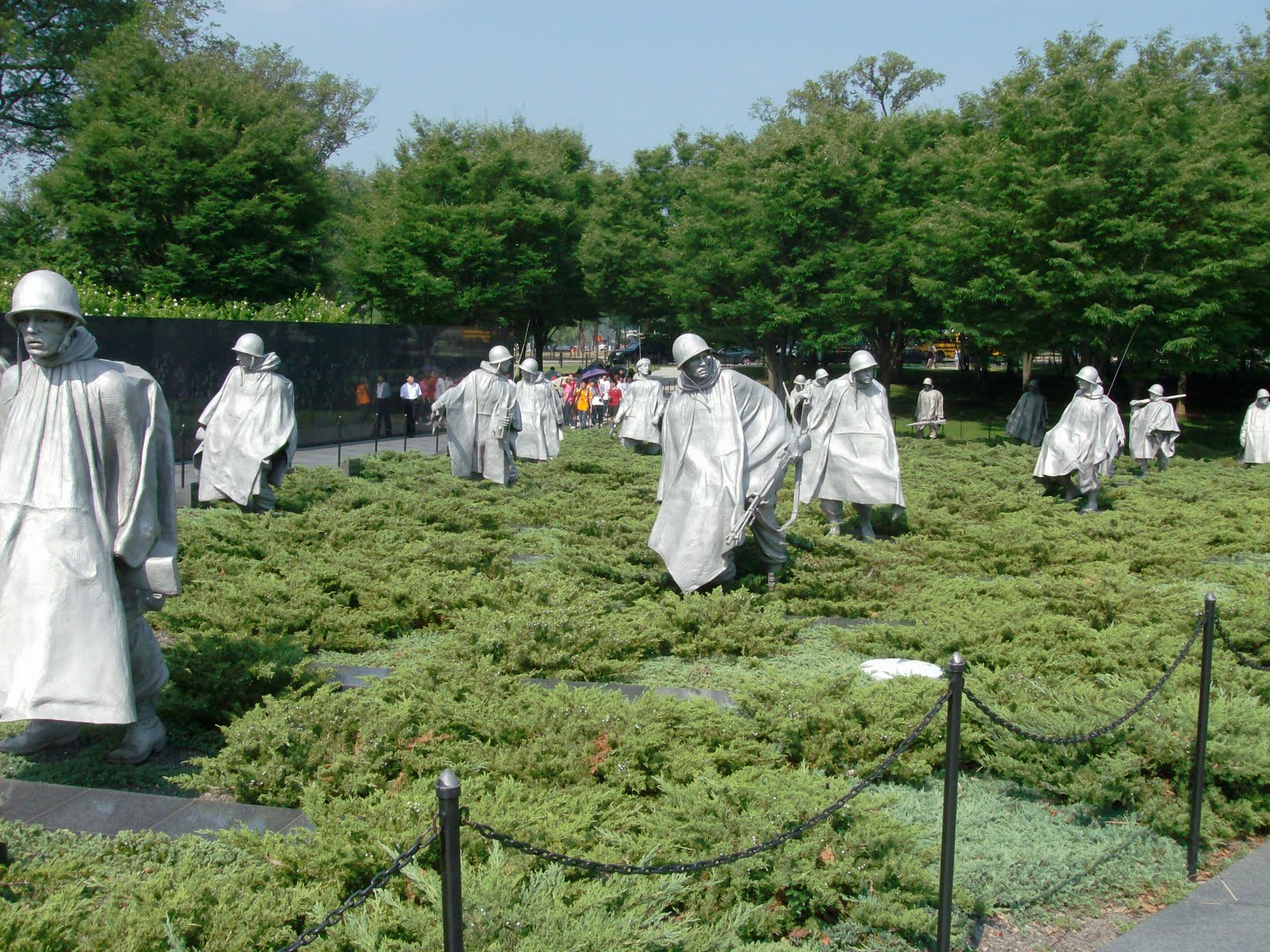
The Vietnam Memorial


A model of the Bell X-15 in which Chuck Yeager broke the sound barrier


The morning will bring an early start and a trip to the Outer Banks and the beautiful sandy beaches and sand dunes there. While we are there we will visit Kitty Hawk, which was the closest postal address to where Wilbur and Orville Wright made their first powered flights and helped begin an amazing century of manned flight. There are more replicas of their first 'flyer' like you see in the photo below from the Smithsonian. The interesting thing is that at the time scientists were so convinced powered flight was impossible, or unmanageable, that what the Wright brothers did wasn't taken seriously. The U.S. government did not think it had much practical benefit, and the brothers went on to France to work with some aviation pioneers there. Similarly Alexander Graham Bell's work in testing Canada's first flying machine at Baddeck Nova Scotia was also considered foolishness at the time.


A replica Wright Flyer at the Smithsonian


Saturday, July 17, 2010

A Visit to Washington D.C.

Our friends (& family) Allison & John hosted us at their house outside Washington D.C. on Thursday and Friday. John is a US Navy Commander and took a day off to show me around the Washington Mall, White House and Smithsonian Museums, while Shirley visited with Allison, Jake and Lilyanne. John and I left early to beat the traffic and we took the METRO train to the city centre. Everything is much bigger than what I imagined. The "Mall" which I always assumed was a few city blocks long, was probably a half mile. The Washington monument is gigantic and John pointed out the different shade of stones used in construction, as it was built in different stages. Only the reflecting pool was a disappointment because, being muddy, didn't reflect. The capital building was way off in the distance, looking small even though it too is huge.
John pointed out the new WW-2 memorial, which was just built in 2004 during George W. Bush's presidency. Considering the cost and size of the war it was long overdue. The Vietnam Monument had engraved on it the names of all the soldiers who were killed or missing in action, in the order they were lost. There are names of students I went to High School in Illinois with on that wall somewhere, and it doesn't seem all that long ago that 'the draft' was a topic of conversation with all of us nearly 18 year olds. The Korean War memorial included life-size sculptures of soldiers on patrol. Despite the heat of the day (100 degrees F.) you could almost feel the damp misery of the men in ponchos marching. John pointed out that the media often forgets that soldiers choose to go into conflict, know what the risks are, and are willing to take these risks for the principles involved. Closer to noon we went indoors into the air-conditioned comfort of the Smithsonian Museum of Aviation. It had real and replica displays of some of the most famous aircraft, space craft & astronauts involved in the last century's aviation history. I wonder if there was any other time when 100 years made such a profound change in technology - man went from primitive and unpredictable powered flight to heavy-lift aircraft and space travel. Leaving in good time to beat the rush hour, which in Washington is legendary, we were a few hundred yards from the last subway station when some lunatic decided to walk off the platform onto the subway tracks. The train halted, retreated, and dropped us back 5 miles and the delay getting back to the car landed us smack into unforgiving D.C. traffic. Imagine everybody going the same direction and there is absolutely only one way to get there; no short-cuts, not round-abouts, no alternative routes, just gridlock for miles and miles and miles.
We left at 3:00 AM to continue to Shirley's brother's place near Raleigh North Carolina. More about that later.

Thursday, July 15, 2010

It's All About the Setting

Nothing inspires a good story like a unique setting. Shirley and I had some extra hours to kill while driving through Pennsylvania and the folders we had gathered at the state line gave us some unusal destinations. Off the Interstate and winding down through the old coal bearing hills we came to the town of Jim Thorpe, Pennsylvania. It was named for the Olympic champ, a native man who was treated shamefully by the various sports bodies who governed the many sports Thorpe excelled in early in the 1900's. (they say his records for pentathlon and decathlon still stand today) Thorpe's widow, as it happens, was a scam artist who conned the town into renaming itself to Jim Thorpe in honour of her late husband, who died drunk and penniless. She promised many financial benefits to the town, such as huge amounts of tourism, and a hospital. The town name was changed, (and considering the previous name of Maunch Chunk, it was well they did), and the body of Jim Thorpe was disinterred, moved to Pennsylvania, and buried in town with full honours. Unfortunately the tourists failed to show for many years, and the hospital was not forthcoming. Not to be discouraged, the ambitious town fathers changed a five mile coal train loop with a mile long cable ascent into the world's first roller-coaster, where people loaded into special cars and were dragged uphill and then sent down for a fast five mile trip down the mountain. The train is still operating.
The town is a great place to see. It is like old Quebec City. The streets wind around the narrow folds of the valley and the buildings are designed to fit into the limited spaces. Yards and laneways end in neat home-made stone walls. The houses are wood and painted with generous amounts of colour. Some of the colours match. Check it out. Art shops and law offices abound here, so there is plenty of money and people to spend it. There is a gothic-looking jail where some Irish miners, the famous Molly McGuires, were hanged for promoting violence against the mine way back when mining was controlled by rich financiers and the local men worked in near-lethal conditions. A mine museum nearby had some cool artifacts. This is a great place to visit if you have some hours to spend. Today we are visiting Allison and John Sullivan, with son Jake and daughter Lilyanne, in Triangle Virginia. Tomorrow John, a US Naval Commander will show me around Washington D.C.
Driving long distances gives me time to think and I'm getting some ideas to add to the "Dan Time Boy" story. Got some new ideas about that, but we'll see what happens.


Tuesday, July 13, 2010

A Rejection and a New Trip

I finally heard back from one publisher (whose name starts with Schol and ends in astic) and they have rejected my manuscript for the "Escape the Mine" story. The senior editor, an old friend, liked the writing but said it was more suited to High School age readers, and their market ends about Grade 8 or so. Now there are still two publishers looking at it, so all is not lost, yet. Scholastic does a great job in selling both in the USA and Canada and their business was something I was looking forward to. Obviously that is not to be. Writing is actually one of the easier parts of this business; I find it much harder to be patient and wait for a reply...
However! Tomorrow Shirley and I depart on a road trip to see various members of Shirley's family, and this will involve passing by the Outer Banks of North Carolina, Washington D.C. and Raleigh, North Carolina as well as Shenandoah National Park in the Smokey Mountains. We will take lots of photos, especially in Washington.
The Outer Banks, North Carolina

Monday, July 5, 2010

Putting it all in writing...

Now, armed with all the photographs I took, plus sound recordings of conversations and the shriek of machinery at 1000 feet (Wabowden) and 4550 feet below the earth (T-1) I am trying to sort out everything. I have corrected some mistakes in the manuscript for "Escape the Mine" and I am working on some changes to three other manuscripts which are in various stages of writing. (Not all of them are about mining) As a long term project I was hoping to hear some more creepy mine stories, mine lore and pranks played by those who work underground as part of my research but I wasn't as successful as I would like to be. When I was first working there (37 years ago!) I got to know a lot of guys who could spin tales - most of them in the b.s. category - of mining and miners. Now the typical miner is more educated, more serious and less likely to play pranks on their fellow workers...

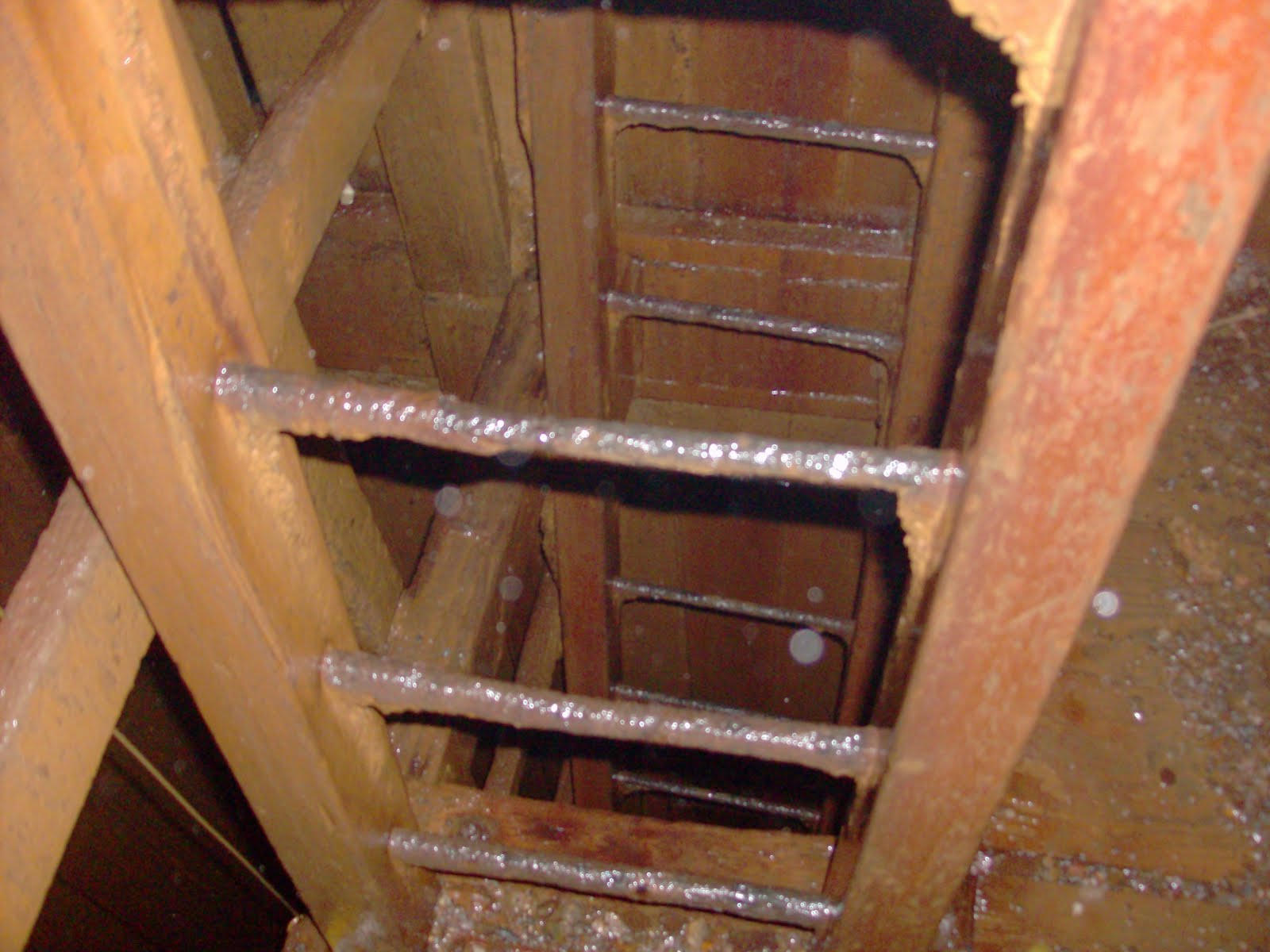
This first ladderway is an escape manway which goes from surface to the very bottom of the mine. It is one of the ways out of the mine in an emergency. In my novel, a young fellow will sneak underground by descending these ladders.


Below is a scoop-tram loading ore into a mine truck

A rock face ready for a blast


The escape manway at 4000 feet. It is much wetter and slimier, but also much warmer.


This is a small platform above a mine drift, where the young heroes will hide from the murderers in the "Escape the Mine" story.


Don and Joyce Belton. Don is wearing the gold helmet he was given at retirement. Don was a great source of information.


Monday, June 28, 2010

Thoughts on Thompson

I'm in the Winnipeg airport, having left myself lots of time between flights in case of delays or whatnot. (No delays, no whatnot) I spent a night here once, many years ago, and things are still a bit on the small side, but a new terminal is being completed as I type. The flight here on a small SAAB passenger aircraft was smooth and pleasant and it actually felt like flying - unlike the bigger jets.
Thoughts on Thompson: Thompson is changing from when I was first there. The roads and foundations of buildings have improved. Discontinuous permafrost used to lie in patches here and there and when buildings or roads were put there, they would heave or drop noticeably as the ground beneath melted. Sunlight beaming down on the exposed boreal forest soil, which is very thin, melted the ground beneath, causing many of the problems. Gradually over time the soil has become stable. In other areas of town exposed bedrock of Canadian Shield is a great place to build on and the three tall apartment buildings are put there. As I mentioned, artwork now graces what used to be painfully bare walls of siding on most of the buildings. Schools almost entirely without windows are still a common sight. Their resemblence to jails is easy to see, for me. I am sure the teachers do much work outside the building when the weather permits. But that north wind is awful cold in winter! Government, both Provincial and Federal, is putting a lot of $ into the town with infrastructure projects such as buildings and head-offices located all over. Thompson's multicultural flavour is as evident as before. Sikhs, Muslims with women wearing the hijab, and Indians (from India) are very common here and are taking good advantage of the opportunity for jobs and good pay. VALE/INCO needs workers badly and is hiring. Everywhere in restaurants and stores the tunrover is very high and help wanted signs flourish. A twelve-year-old boy who recognized me from a school visit (You're that author, right?) served me my Bagel BELT in Tim Hortons. He's been working there 3 weeks already.

This photo, taken from the headframe at T-1, shows the open pit excavation beside the mine. When I worked here that was a lake; it has since been diverted and drained and the top layer mined out. From the aircraft this morning it is certainly noticeable, but then, seeing the million of acres of vacant and unused land, I must disagree with my brothers & sisters in the extreme end of the environmental movement. Development helps people most of all, and when done sensibly, should be a net benefit. Now having said that, there is still a lot of abuse. Why anyone would drive a Hummer is beyond me. To my mind, unless a person needs to travel constantly over rough terrain, driving a Hummer is like flipping the bird at everybody.
More later.